Basic Electronics Course
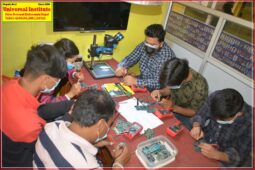
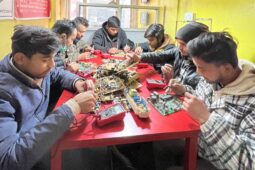
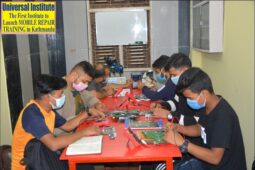
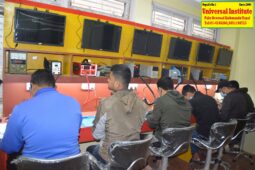
At Universal Electronics Institute, we provide industry-oriented training that focuses on both theory and hands-on practice. This course is specially designed for students, job seekers, and anyone interested in learning electronics from the ground up.
You’ll also learn about important electrical concepts used in consumer electronic devices and get a serious grounding in electronics theories that are absolutely essential for workplace safety and success.
Basic Electronics Course Contents
- Introduction to Electronics
- What is Electronics?
- Types of Electronics (Analog & Digital)
- Basic Electrical vs Electronics difference
- THT (Through Whole Technology)
- SMT (Surface Mount Technology)
- Electrical Fundamentals
- Atom and its Structure: (Electron, Proton & Neutron)
- Voltage, Current, Resistance
- Ohm’s Law
- Kirchoff’s Laws
- Power and Energy
- AC vs DC Current
- Circuit Basics
- Series Circuit
- Parallel Circuit
- Combination Circuit
- Breadboard usage
- Circuit Basic, Circuits Types & Ground
- Short Circuits & Open Circuit
- Circuit Test Method: Cold & Hot
- Tools & Equipment Training (How to Use and Read)
- Multimeter (measure Voltage, Current, and Resistance)
- DC Power Supply
- Soldering iron
- Soldering and Desoldering Tools
- Opening Tools and Tweezers
- Tools and equipment
- Soldering techniques
- Safety precautions
- Proper handling of tools
- Lab safety rules
- Electronics Components
(Active Components & Passive Components)
- Resister & Resistance
- Resistor in Series & Parallel
- Types of Resistors
- Works, Unit & Rating Schematic Symbol & PCB Marking
- SMT & THT Resistor Fault Finding: Short, Open, Leakage
- Resistance and Ohm’s Law
- Capacitor & Capacitance
- Capacitor in Series & Parallel
- Types of Capacitor: Electrolytic & non electrolytic, polarized & non polarized
- Works, Unit & Rating
- Schematic Symbol & PCB Marking
- SMT & THT Capacitor Fault Finding: Short, Open, Leakage
- Inductor & Inductance
- Works, Unit & Rating
- Schematic Symbol & PCB Marking
- Effects on AC and DC
- SMT & THT Inductor Fault Finding: Short, Open and Damaged
- Semiconductor (Diode)
- Diode & Bridge Rectifier: How it Works
- Types of Diode: Power Diode, Zener Diode, LED etc.
- Schematic Symbol & PCB Marking
- Anode, Cathode, P-Type Material, N-Type Material & Depletion Region Concept
- Bias Concept: Forward Bias & Reversed Bias
- SMT & THT Diode Fault Finding: Short, Open, Leakage
- Transistor
- Transistor Working Concept
- Layers: Base, Emitter & Collector
- Transistor Type: B.J.T & U.J.T Transistor
- Schematic Symbol & PCB Marking
- NPN & PNP Transistor
- Semiconductor Doping Concept
- Transistor Biasing: Forward Bias & Reversed Bias
- SMT & THT Transistor Fault Finding: Short, Open, and Damaged
- Mosfet
- MOSFET Working Concept
- Layers: Gate, Source & Drain
- Schematic Symbol & PCB Marking
- MOSFET Classes: Depletion Mode & Enhancement Mode
- MOSFET Type: N Chanel & P Chanel
- Single MOSFET & Dual MOSFET Concept
- Switch on and Switching MOSFET Concept
- MOSFET Fault Finding: Short, Open And Damage
- SCR (Silicon Controlled Rectifier)
- SCR → Basic controlled rectifier
- LASCR → Light-controlled
- GTO → Gate ON/OFF control
- RCS → Reverse current capability
- SCS → More control with extra gates
- TRIAC → AC bidirectional control
- Transformer
- Working Concept
- Primary Coil & Secondary Coil
- Transformer Type: Step-down & Step-up
- Iron Core & Magnetic Field
- Fault Finding: Short, Open and Damaged
- Fuse / Protection Concept
- Working Concept
- Schematic Symbol & PCB Marking
- Fault Finding: Open, Damaged
- Switches
- Working Concept
- Schematic Symbol & PCB Marking
- Fault Finding: Open, Damaged
- Single Pole Single Throw Switch (SPST)
- Single Pole Double Throw Switch (SPDT)
- Double Pole Single Throw Switch (DPST)
- Double Pole Double Throw Switch (DPDT)
- Push Button Switch, Toggle Switch, Limit Switch.
- Integrated Circuits
- Works & Inside Form of I.C
- Schematic Symbol & PCB Marking
- Types of I.C: PIN I.C & BALL I.C
- Models of IC: SIP, DIP, PGA, LGA, BGA etc.
- Logic Gates & Comparator:
- Series and Parallel Combinations of Resistors
- Voltage Divider
- Current Divider
- Branch Current Method
- Loop Current Method.
- Basic Circuit Concept
- Alternating Current Circuits
- Rectifier circuit
- Capacitance Circuit
- Inductance Circuit
- Voltage regulator Circuit
- RC Circuit
- RL Circuit
- LC Circuit
- RCL Circuit
- Filter Circuit
- Diode Circuit
- Transistor Circuit
- Operational Amplifier Circuit
- Basic Troubleshooting
- Identifying faulty components
- Simple circuit repair
- Testing components
- Power Supply
A power supply is a component that supplies Regulator power to at least one electric load. Typically, it converts (AC to DC) one type of electrical power to another, but it may also convert a a different form of energy.
- Switch Mode Power Supply (SMPS)
- Linear Power Supplies
- Variable Power Supply
- Ripple regulated power supply
- Adjustable regulated power supplies
- Battery and solar power supplies & Many More…
Course Duration: Regular: 45 Days & Short Course: 25 Days
Training Time: 1-2 Hours Per day
Course Contain: Theory 20% + Practical 80%
Language of instruction: Nepali/Hindi /English
Eligibility Criteria: 8 to 10th Class (At least Completed Grade 8)
Group structure: 6 Participants per group
New classes starts on: 1st,10th and 20th(Every Month)